


Latest News
Blog
Integrating Equity Compensation Into Your Wealth Strategy

February 16, 2026

Equity compensation has evolved into a critical component of wealth building for many professionals, extending far beyond its origins as an executive perk. From restricted stock units (RSUs) to stock options and other equity-based awards, these compensation structures have proliferated across various sectors and career levels.
Yet this form of compensation introduces meaningful complexity into financial planning. Successfully navigating the intersection of equity awards and comprehensive wealth management requires careful attention to risk management and strategic decision-making. These considerations apply whether you’re employed by an emerging startup or an established publicly traded corporation—the challenges transcend company performance alone. For individuals whose compensation packages include substantial equity components, thoughtful planning can significantly influence long-term financial outcomes.
The expanding role of equity-based compensation
Multiple forms of equity compensation exist, each carrying unique implications for taxation, vesting schedules, liquidity considerations, and wealth planning. RSUs, stock options, and restricted stock awards (RSAs) represent the most prevalent structures.
While equity compensation isn’t universal, its prominence alongside traditional salary and bonus structures has increased substantially. From an employer perspective, equity helps conserve capital resources while encouraging employee retention and aligning workforce objectives with company performance. For employees, these awards offer opportunities for wealth accumulation linked to organizational success, establishing a framework for long-term financial growth.
Historically, equity compensation in the mid-1900s was largely confined to senior leadership as a tax-efficient mechanism for aligning executive interests with shareholder objectives. The 1950 Revenue Act introduced restricted stock option concepts, enabling employees to access preferential capital gains treatment when specific holding criteria were satisfied. This framework made equity compensation increasingly attractive to organizations.
The 1990s dot-com boom transformed the equity compensation landscape significantly. Stock options became essential recruiting and retention mechanisms for startups operating with constrained cash resources but experiencing rapid valuation growth. During this period, companies weren’t required to recognize stock options as expenses on financial statements, unlike other compensation forms. Following the bubble’s collapse in the early 2000s, many options became essentially worthless. This period also triggered accounting rule modifications that required stock options to be treated consistently with other compensation types.
These experiences reshaped corporate approaches to equity compensation design. Major technology companies, for example, increasingly favored RSUs due to their ability to maintain value during stock price declines. Unlike options—which only generate value when stock prices exceed the strike price—RSUs represent actual share grants that vest according to predetermined schedules. Recent research by the National Association of Stock Plan Professionals (NASPP) and Deloitte indicates that technology and life science sectors provide RSUs to approximately 60% of their employees.1
Determining the value of equity awards in your portfolio
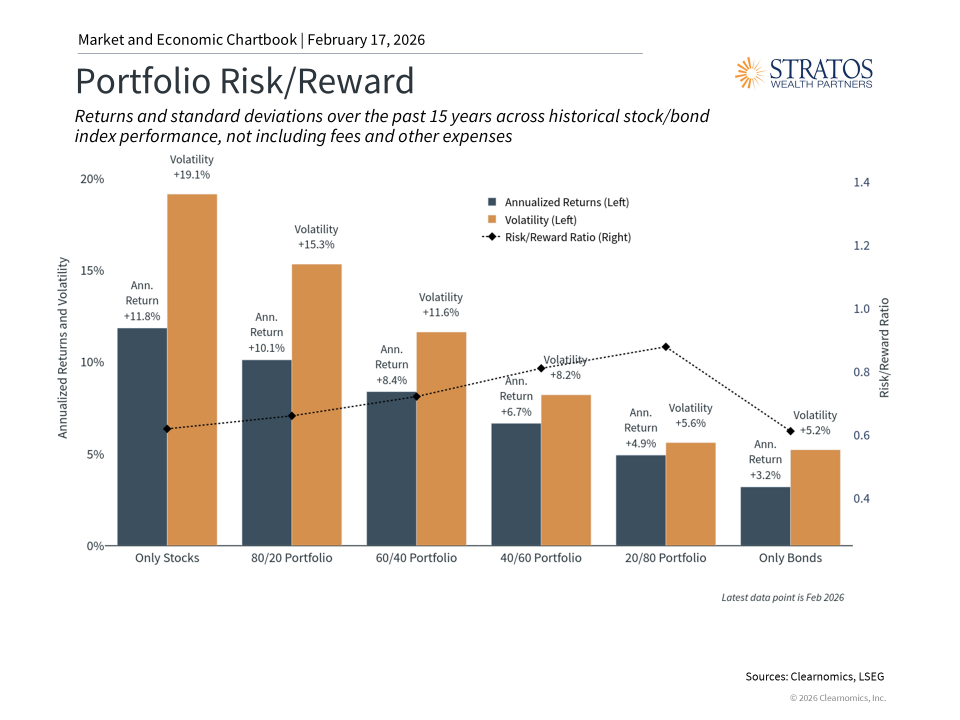
Among the most complex aspects of integrating equity compensation into wealth planning is establishing appropriate valuation methods. This determination carries significant weight, as it influences portfolio construction decisions and asset allocation strategies. Liquidity considerations—specifically, the ease with which equity can be converted to cash—add layers of complexity, given various restrictions around vesting periods, trading windows, and secondary market access.
In the absence of structured financial planning, some individuals treat unvested equity compensation or shares without public market access as having zero value. While this perspective is understandable, such equity typically possesses value that merits inclusion in comprehensive financial planning.
Conversely, employees at rapidly growing private companies might assign value based solely on recent funding rounds. This approach presents its own challenges, as private company valuations carry inherent uncertainty and may not reflect realized values following liquidity events like initial public offerings or acquisitions.
A more nuanced methodology acknowledges that equity compensation represents genuine value while recognizing important qualifications. For publicly traded company RSUs, current market pricing provides a reasonable baseline while acknowledging expected fluctuations. For options, consider both intrinsic value and time value derived from potential future appreciation. For private company equity, recent valuations offer guidance but may warrant discounts reflecting illiquidity and valuation uncertainty.
Understanding and addressing concentration risk
When evaluating household asset allocation holistically, “concentration risk” emerges as a critical consideration. This concept describes situations where excessive wealth is concentrated in a single investment—in this context, your employer’s stock. The risk intensifies because both employment income and investment portfolio performance depend on a single company’s fortunes.
Comprehensive financial planning offers multiple strategies to address these concerns. The objective is proactive planning that captures the benefits of equity compensation while managing risks related to concentration, taxation, liquidity constraints, and valuation uncertainty.
Consider these strategic approaches:
- Systematic selling schedules involve establishing predetermined plans to liquidate specific percentages of vested shares at regular intervals. By committing to a plan in advance, you eliminate emotional decision-making and progressively reduce concentration exposure. Rule 10b5-1 trading plans offer particular value for individuals facing trading restrictions. These structures enable automated sales while maintaining compliance with insider trading regulations. However, they demand careful implementation, including adherence to cooling-off periods and avoidance of overlapping plan structures.
- Anticipating significant tax events demands thoughtful preparation. Strategic considerations may include optimizing asset location decisions, deferring tax-loss harvesting activities, or implementing charitable giving strategies that complement tax planning objectives. For example, contributing appreciated long-term holdings to a donor-advised fund generates immediate tax deductions, reduces single-stock concentration, and may eliminate capital gains tax obligations.
- Establishing a liquidity reserve through cash holdings and short-term fixed income securities helps mitigate liquidity constraints and supports anticipated tax liabilities or near-term spending needs. This approach ensures adequate cash availability, preventing forced share sales during unfavorable market conditions.
- Portfolio design across other investment accounts should account for equity compensation holdings. Substantial employer stock exposure may necessitate diversifying retirement accounts away from that specific sector and company. For instance, a technology sector employee with significant RSUs might consider reducing or eliminating technology stock exposure in 401(k) or IRA accounts. Similarly, if your company’s performance correlates with particular economic variables like interest rates, diversified portfolios should incorporate assets with different performance characteristics under those conditions.
For individuals managing substantial concentrated positions, advanced strategies exist including protective put options (though frequently prohibited for employer stock), exchange funds that aggregate shares from multiple participants, or complex charitable donation structures. These sophisticated approaches typically warrant professional guidance given their intricacy.
Viewing equity compensation within your complete financial picture
Effective equity compensation management requires examining how these assets integrate with your broader wealth strategy. The objective involves developing a comprehensive financial framework that captures equity compensation advantages while ensuring overall portfolio alignment with long-term financial objectives.
The bottom line? While equity compensation offers substantial wealth-building potential, it demands strategic oversight. Through understanding associated risks and implementing proactive planning, you can successfully incorporate these assets into a holistic financial strategy designed for enduring success.
References
- https://www.naspp.com/blog/5-trends-in-full-value-awards
Taylor Salisbury is a registered representative with, and securities offered through LPL Financial, member FINRA/SIPC. Investment advice offered through Stratos Wealth Partners, Ltd., a registered investment advisor. Stratos Wealth Partners, Ltd. is a separate entity from LPL Financial.
Trading instructions sent via email, fax, or voicemail will not be honored. There is no assurance that these messages can be retrieved on a timely basis, nor is there any sure method of confirming the customer identity. The information contained in this message is being transmitted to and is intended for the use of only the individual(s) to whom it is addressed. If the reader of this message is not the intended recipient, you are hereby advised that any dissemination, distribution or copying of this message is strictly prohibited. If you have received this message in error, please immediately delete.
Copyright (c) 2026 Clearnomics, Inc. All rights reserved. The information contained herein has been obtained from sources believed to be reliable, but is not necessarily complete and its accuracy cannot be guaranteed. No representation or warranty, express or implied, is made as to the fairness, accuracy, completeness, or correctness of the information and opinions contained herein. The views and the other information provided are subject to change without notice. All reports posted on or via www.clearnomics.com or any affiliated websites, applications, or services are issued without regard to the specific investment objectives, financial situation, or particular needs of any specific recipient and are not to be construed as a solicitation or an offer to buy or sell any securities or related financial instruments. Past performance is not necessarily a guide to future results. Company fundamentals and earnings may be mentioned occasionally, but should not be construed as a recommendation to buy, sell, or hold the company’s stock. Predictions, forecasts, and estimates for any and all markets should not be construed as recommendations to buy, sell, or hold any security–including mutual funds, futures contracts, and exchange traded funds, or any similar instruments. The text, images, and other materials contained or displayed in this report are proprietary to Clearnomics, Inc. and constitute valuable intellectual property. All unauthorized reproduction or other use of material from Clearnomics, Inc. shall be deemed willful infringement(s) of this copyright and other proprietary and intellectual property rights, including but not limited to, rights of privacy. Clearnomics, Inc. expressly reserves all rights in connection with its intellectual property, including without limitation the right to block the transfer of its products and services and/or to track usage thereof, through electronic tracking technology, and all other lawful means, now known or hereafter devised. Clearnomics, Inc. reserves the right, without further notice, to pursue to the fullest extent allowed by the law any and all criminal and civil remedies for the violation of its rights.
Tracking ID: 1065779